Specified finishes and secondary operations coordinated with your fastener order.
Fasteners and precision components often require more than the correct material and dimensions. Webson Fasteners can coordinate plating, heat treatment, post-plating baking, thread patching and other specified secondary operations so customers receive completed parts through one supplier relationship.
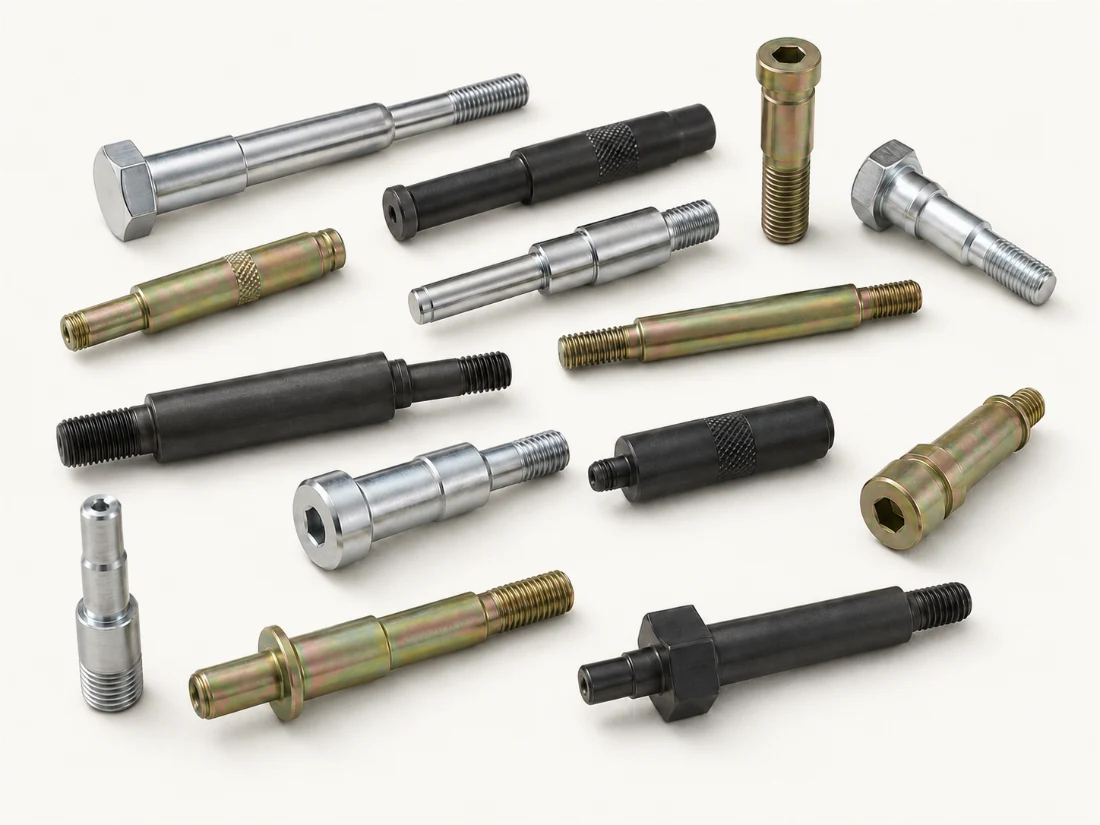
Why a fastener rarely ships straight off the machine.
A component with correct dimensions and correct material can still be incomplete. What makes it usable is often the process applied afterward, and that process is normally called out on the drawing rather than left open. Webson can coordinate the base component together with its specified secondary operations, so the requirement moves through one supplier relationship rather than several.
Secondary processing is typically driven by one or more of the following:
Corrosion protection
A finish specified to protect the part in its service environment.
Surface compatibility
Requirements arising from contact with mating materials or adjacent components.
Appearance
Color, uniformity or finish quality called out for visible hardware.
Electrical or environmental requirements
Conductivity, isolation or exposure conditions identified by the specification.
Hardness or mechanical properties
Heat treatment specified to achieve a required condition or property class.
Thread-locking features
Patches or compounds specified to resist loosening in service.
Installation requirements
Lubricity, torque or handling considerations identified for assembly.
Compliance with a customer drawing
Processing required explicitly by the controlling drawing.
Compliance with an industry specification
Requirements imposed by an industry, material or process specification.
Identification and packaging
Marking, labeling, packaging or kitting requirements applied after processing.
Webson does not determine whether a given finish is suitable for an application. The finish must be specified or approved by the customer or design authority — Webson coordinates what the drawing, specification and purchase order require.
Five steps from requirement to finished order.
Processing is arranged with qualified sources selected for the component and the specification. Webson manages the commercial, quality and documentation requirements across those steps.
-
01
Review the component requirement
Webson reviews the part number, drawing, revision, base material, quantity and required processing.
-
02
Confirm the governing specification
The plating, coating, heat-treatment, baking or patching specification is identified along with any thickness, appearance, performance or documentation requirements.
-
03
Evaluate processing sources
Webson coordinates the requirement with an appropriate manufacturing or processing source based on the component and specification.
-
04
Coordinate production and processing
The base component and required secondary operations are managed according to the approved order requirements.
-
05
Review the finished order
Completed parts and applicable documentation are reviewed against the purchase order before release.
Incomplete specifications or requirements that conflict with each other will be raised before quoting or processing. Clarifying them early is faster than reworking a finished lot.
Processes that can be coordinated.
Availability depends on the component, base material, geometry and process requirements. Each category below is coordinated according to the specification supplied with the order.
Plating
Plating can be coordinated according to the required specification, base material, thickness, appearance and application. Different plating requirements can be reviewed when the applicable specification is provided.
Zinc Finishes
Zinc finishing options can be coordinated for applicable fasteners according to the customer’s drawing, purchase order or governing specification. Corrosion-resistance and salt-spray performance are determined by the specification supplied, not assumed.
Alodine and Conversion Coating
Alodine or chemical conversion coating can be coordinated for applicable components when required by the drawing or specification. Suitability depends on the base material — conversion coatings do not apply to every material.
Heat Treatment
Heat treatment can be coordinated according to the material and performance requirements identified on the drawing or purchase order. Hardness and process requirements come from the governing specification rather than from Webson.
Post-Plating Baking
Controlled baking or a specified 24-hour bake can be coordinated where required for hydrogen-embrittlement relief. Required temperature, duration, timing after plating and the governing specification must be identified by the customer’s technical requirements.
Thread Patching and Locking Features
Thread patches, locking compounds or related features can be coordinated when identified by the drawing, part specification or purchase order. The specification determines the treatment applied.
Packaging and Kitting
Finished components can be grouped, identified and packaged according to an assembly, job, work order or recurring production requirement. See custom kitting and packaging.
“Zinc plated” is not yet a requirement.
Two parts described as zinc plated can be processed to different specifications, thicknesses, types and appearance requirements, and both can be correct. The same is true of “heat treated.” What makes a finish quotable, repeatable and inspectable is the specification behind it — which is why the items below matter more than the finish name.
Plating or Finish Specification
The controlling specification identified by number, not by description alone.
Specification Revision
The revision that applies, since requirements change between issues.
Base Material
The substrate, which determines which processes are applicable at all.
Finish Type or Class
The type, class or grade within the specification that applies to the part.
Required Thickness
Thickness or coating weight requirements, including any minimum.
Color or Appearance
Color and appearance requirements where the specification or drawing calls them out.
Heat Treatment or Hardness
Required condition, property class or hardness, and the governing specification.
Post-Plating Bake
Whether a bake is required, and the temperature, duration and timing specified.
Masking Requirements
Areas that must remain unprocessed, threads excepted, or otherwise protected.
Thread and Dimensional Effects
Dimensional allowances for coating build-up, and thread-fit requirements after processing.
Inspection and Testing
What must be inspected or tested, and the acceptance criteria that apply.
Certification Requirements
Process certificates, material certifications or test reports required by the order.
Approved Processing Sources
Any customer-approved or specification-approved source requirements that restrict who may process the part.
The customer’s drawing, specification and purchase order control the finished requirement. Webson does not grant engineering approval and does not substitute one finish for another — if an alternative is proposed, it is submitted to the customer for review and approval first.
Why bake requirements belong in the RFQ.
Certain high-strength steel components require carefully controlled cleaning, plating and post-plating baking. Where a bake is required, the timing between plating and baking is part of the requirement — which means it has to be planned into the order rather than added afterward.
Risk depends on the component
Material, hardness, manufacturing history and the processing applied all bear on whether controls are needed.
Specifications define the controls
The applicable engineering and industry specifications establish what cleaning, plating and bake requirements apply.
Communicate bake requirements at quotation
Bake requirements affect routing and schedule, so they should be stated with the RFQ rather than after processing begins.
The design authority approves the process
The customer or design authority determines and approves the required process for the component and its application.
Webson coordinates the specified bake
Webson arranges the specified bake requirement with the processing source and manages the documentation the order calls for.
Webson does not independently determine whether a component is suitable for a critical application, and does not represent that baking eliminates every risk of hydrogen embrittlement. Those determinations rest with the customer’s engineering and the governing specifications.
Standard hardware and made-to-print parts alike.
Secondary operations are not limited to custom parts. Standard hardware is frequently supplied with a specified finish, and both routes are reviewed the same way.
Commercial Screws and Bolts
Standard externally threaded fasteners supplied with a specified finish. See Commercial Hardware.
Nuts and Washers
Standard fastening components processed to the required finish specification.
Studs
Fully and partially threaded studs finished according to the drawing or order.
Pins and Retaining Hardware
Locating, pivoting and retaining components requiring corrosion protection or surface treatment.
Electronic Hardware
Standoffs, spacers and panel hardware where finish affects conductivity or appearance. See Electronic Hardware.
Mil-Spec Hardware
Specification-controlled hardware supplied with the finish and documentation the specification requires. See Mil-Spec Hardware.
Made-to-Print Fasteners
Drawing-based components finished as part of the manufacturing requirement. See Custom Fasteners and Finishes.
Precision Machined Components
Turned and milled parts requiring plating, heat treatment or patching to complete. See custom fastener manufacturing.
Modified Standard Fasteners
Stock hardware altered and then refinished to the required specification.
Feasibility depends on the material, geometry, specification, quantity and existing condition of the parts. Customer-supplied components can be reviewed where applicable — not every part submitted for processing can be accepted, and the review establishes whether it can.
Control across the order and the process.
Processed parts pass through more hands than stock items, which is precisely why the controls matter. Orders involving secondary operations are managed under Webson’s AS9120B and ISO 9001 certified quality-management system.
Purchase-Order and Specification Review
Order requirements are reviewed against the drawing and governing specification before processing is released.
Drawing and Revision Control
The identified drawing and revision govern the order, and revisions are handled as changes.
Processing-Source Qualification
Processing and manufacturing sources are selected and maintained under the quality system.
Part and Lot Identification
Parts and lots are identified through processing so material remains traceable to its order.
Certification Review
Required certificates are reviewed against the order before parts are released.
Material and Lot Traceability
Applied when required by the purchase order or applicable specification, rather than automatically.
Inspection and Testing Documentation
Inspection or test evidence supplied when specified by the order or specification.
Nonconformance Control
Nonconforming material is handled under documented procedures, with customer notification where required.
Documentation Retention
Records are retained according to applicable quality-system and customer requirements.
Process certifications, inspection reports, test reports and full material traceability are not automatic on every order. Identify each documentation requirement during quotation and include it on the purchase order so it is planned into processing.
Where specified finishes come up.
Aerospace and Defense
Specification-controlled finishes, heat treatment and bake requirements on airframe, avionics and ground-support hardware.
Electronics
Finishes affecting conductivity, isolation and appearance on panel and chassis hardware.
Medical Equipment
Corrosion-resistant and passivated hardware for devices, housings and supporting assemblies.
Enclosures and Sheet Metal
Corrosion protection and appearance requirements on cabinet, rack and fabricated-unit hardware.
Lighting Equipment
Finishes selected for outdoor exposure and thermal service on fixture and bracket hardware.
Security Equipment
Corrosion-resistant and tamper-resistant hardware for panels and mounted units.
Industrial Machinery
Heat-treated and finished components for machinery and production equipment.
Specialized Production Equipment
Finished made-to-print components for purpose-built and low-volume equipment.
See the full range of sectors Webson supports on the industries page.
Finished parts on a repeating requirement.
When a finished part recurs, the value of a program is consistency: the same specification, the same processing route and the same documentation on every release. Recurring finished-part requirements can be evaluated for the arrangements below.
Blanket Orders
A total quantity placed under one order and drawn down over the program period.
Scheduled Releases
Agreed release dates aligned to the customer’s production schedule.
Vendor-Managed Inventory
Finished parts folded into a managed replenishment program. See vendor-managed inventory.
Local Inventory Support
Agreed quantities held for release from Webson’s Deer Park, New York facility.
Custom Kitting and Packaging
Finished parts packaged with related hardware per assembly or bill of material. See custom kitting and packaging.
Processing and documentation requirements must remain consistent and controlled throughout a recurring program — a specification change on a program part is a change to the program, not a detail. Pricing, availability and lead times are established per program and per part, and none are guaranteed in advance.
Information required for a finished-part quotation.
Partial information is still worth sending. The list below is what makes a finished-part quotation firm rather than provisional.
Part Number and Description
Customer or manufacturer part number with a description.
Current Drawing and Revision
The controlling drawing and the revision that applies.
Required Quantity
Quantity for this requirement.
Base Material and Grade
The substrate material and grade to be processed.
Finish Specification
Plating, coating or finish specification identified by number.
Type, Class or Thickness
The type, class or thickness required within that specification.
Heat-Treatment Requirements
Required condition, property class or process specification.
Hardness Requirements
Hardness range and the method by which it is verified.
Post-Plating Bake
Whether a bake is required, with temperature, duration and timing.
Thread-Patching Requirements
Patch or locking-feature requirements and the applicable specification.
Masking or Dimensional Restrictions
Areas to be masked and any dimensional limits after processing.
Inspection or Testing
Inspection and test requirements with acceptance criteria.
Certification and Traceability
Documentation required by the order or specification.
Required Delivery Date
When the finished parts are needed.
Packaging and Labeling
Packaging format and identification requirements.
Approved Processing Sources
Any approved-source restrictions that apply to the processing.
Drawings, specifications, purchase lists and supporting documents can be attached directly to the request on Webson’s RFQ page.
Submit Your Processing Requirements →Finishing and secondary operations questions.
Can Webson coordinate plating with a fastener order?
Yes. Plating can be coordinated with the base component so the parts arrive finished, according to the applicable specification, base material, thickness and appearance requirements identified with the order.
Which fastener finishes and secondary operations are available?
Zinc finishes, Alodine and chemical conversion coating, heat treatment, controlled and 24-hour post-plating baking, thread patching and locking features, and packaging or kitting can all be evaluated. Other plating and finishing requirements can be reviewed when the applicable specification is provided. Availability depends on the component, base material, geometry and process requirements.
Can Webson coordinate post-plating baking?
Yes. Controlled baking or a specified 24-hour bake can be coordinated where required for hydrogen-embrittlement relief. The required temperature, duration, timing after plating and governing specification must be identified by the customer’s technical requirements.
What information is needed to quote a plated or finished fastener?
Send the part number and description, current drawing and revision, quantity, base material and grade, the plating or finish specification with its type, class and thickness, heat-treatment and hardness requirements, any post-plating bake or thread-patching requirements, masking restrictions, inspection and certification requirements and the required delivery date.
Can thread patches or locking compounds be applied?
Thread patches, locking compounds and related features can be coordinated when identified by the drawing, part specification or purchase order. The applicable specification determines the treatment applied.
Can standard and custom fasteners receive secondary processing?
Commercial screws and bolts, nuts and washers, studs, pins and retaining hardware, electronic hardware, Mil-Spec hardware, made-to-print fasteners, precision machined components and modified standard fasteners can all be evaluated. Feasibility depends on the material, geometry, specification, quantity and existing condition of the parts. Customer-supplied components can be reviewed where applicable.
Can Webson supply process certifications and traceability?
Applicable certifications, process documentation and traceability can be supplied when required by the component, specification and purchase order. These are not automatic on every order — identify each documentation requirement during quotation and state it on the purchase order.
Can recurring finished parts be included in an inventory program?
Recurring finished-part requirements can be evaluated for blanket orders, scheduled releases, vendor-managed inventory, local inventory support and custom kitting. The processing and documentation requirements must remain consistent and controlled across the program.
Does Webson perform all plating and heat treatment in-house?
No. Webson coordinates required processing through appropriate manufacturing and processing sources according to the order requirements, and manages the commercial, quality and documentation requirements from quotation through delivery.
More from Webson Fasteners.
Custom Fastener Manufacturing
Made-to-print fasteners and precision components sourced through qualified manufacturing.
Custom Kitting and Packaging
Kits packaged by assembly, job, work order or production requirement.
Vendor-Managed Inventory
Managed replenishment, bin stocking, scheduled releases and blanket-order programs.
Custom Fasteners and Finishes
Drawing-based components with coordinated machining, forming, plating and finishing.
Commercial Hardware
Bolts, screws, studs, nuts, washers and related standard fasteners.
Mil-Spec Hardware
AN, MS, NAS and NASM hardware supplied to specification with aerospace-grade traceability.
Industries
The sectors Webson supplies, from aerospace and electronics to medical and life-safety equipment.
Certifications
AS9120B and ISO 9001 certification for the distribution of fastening products and installation tooling.
Need a fastener supplied with a specified finish or secondary operation?
Send Webson the part information, base material, applicable processing specification, quantity and documentation requirements. We will review the complete requirement and coordinate an appropriate sourcing and processing solution.