Custom fasteners sourced and produced to your drawing.
When a standard catalog fastener will not meet the application, Webson Fasteners can review made-to-print parts, modified standards and specialty hardware. We coordinate qualified manufacturing, secondary operations and documentation according to the drawing, specification, quantity and delivery requirements.
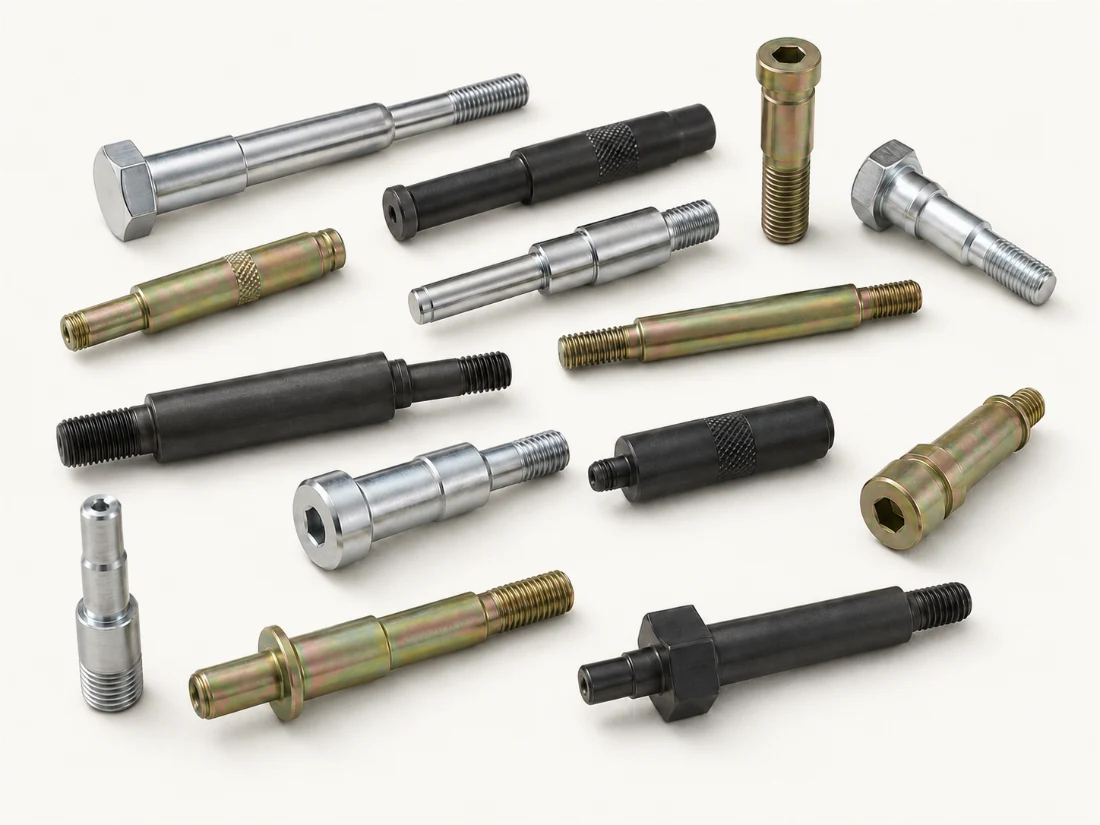
Reasons a catalog part will not do the job.
Most fastening requirements are met from stock. The ones that are not usually fail on a single detail: a length that does not exist, a head that will not clear, a thread class the catalog does not carry. Webson can review both fully custom, made-to-print fasteners and modifications to standard hardware, and will say which of the two is the more practical route.
Nonstandard dimensions
A required length, diameter, grip or head height that falls outside standard catalog offerings.
Application-specific geometry
Features driven by the assembly rather than by a fastener standard.
Special head or drive configurations
Head styles, drive types or security configurations not available as a stock item.
Unusual thread requirements
Nonstandard pitches, thread classes, partial threading or multiple thread forms on one part.
Tight space or assembly restrictions
Clearance, tool access or envelope constraints that rule out standard hardware.
Specific material requirements
A material or grade called out by the drawing that is not stocked in the required configuration.
Controlled finishes and secondary operations
Plating, coating, heat treatment or patching specified to a particular requirement.
Legacy or obsolete part numbers
Components no longer commercially available that must be reproduced from an existing drawing or sample.
Made to an engineering drawing
Parts defined entirely by the customer’s drawing rather than by any commercial standard.
Consolidation of features
Combining what is currently several components into one manufactured part to reduce assembly steps.
Not every drawing or requested configuration can be produced. Geometry, material, tolerances, quantity and tooling all affect feasibility, which is why each requirement is reviewed before Webson commits to a price or a date.
From drawing review through delivery.
Feasibility, price and delivery are established during review, not before it. Webson does not quote a custom part or confirm a date until the drawing and its requirements have been examined.
-
01
Requirement review
Webson reviews the drawing, specifications, revision level, quantity, material, finish, tolerances and documentation requirements.
-
02
Manufacturing evaluation
The part is evaluated against appropriate manufacturing methods and qualified sourcing options.
-
03
Quotation and clarification
Webson identifies questions, commercial considerations and any details that must be clarified before production.
-
04
Production coordination
Approved parts are scheduled with an appropriate manufacturing source and any required secondary operations are coordinated.
-
05
Inspection and documentation
Parts and documentation are reviewed according to the purchase order, drawing and applicable quality requirements.
-
06
Delivery and recurring support
Completed parts are delivered according to the order. Repeat requirements can be evaluated for scheduled releases, blanket programs or inventory support.
Processes that can be evaluated for the part.
Webson works with qualified manufacturing sources across the methods below. Which one suits a given part depends on its geometry, material, tolerances, volume and tooling requirements, so the method is selected during review rather than assumed from the drawing.
CNC Turning
Rotational parts — pins, studs, bushings, spacers, shafts — where diameters and lengths are the controlling features.
CNC Milling
Parts with flats, slots, pockets or multiple features requiring controlled material removal.
Cold Forming / Heading
Repeatable shapes formed from wire or stock, generally suited to higher recurring volumes.
Thread Rolling
Threads formed rather than cut, often preferred where thread strength and surface finish matter.
Cut Threading
Threads machined to the drawing, useful for nonstandard pitches, short runs and larger diameters.
Drilling and Tapping
Through holes, cross holes, blind holes and internal threads added as specified.
Broaching
Internal or external profiles, keyways and drive configurations called out by the drawing.
Forming and Bending
Sheet, wire and rod components shaped to a required profile.
Modification of Standards
A stock fastener altered — shortened, re-headed, drilled, refinished — where that path is more practical than new manufacture.
Multi-Operation Components
Precision parts requiring several coordinated operations and secondary processes to complete.
Manufacturing is performed by qualified sources within Webson’s supply network. Webson reviews the requirement, selects and coordinates the source, and manages the commercial, quality and delivery requirements from quotation through delivery.
Representative custom parts and configurations.
The parts below are representative rather than a complete catalog. If the component you need is not listed, send the drawing — the list reflects common requests, not the limit of what can be reviewed.
Custom Screws and Bolts
Special heads, drives, points, lengths and thread configurations made to drawing.
Specialty Studs
Fully or partially threaded studs with nonstandard dimensions or end configurations.
Shoulder Screws
Precision shoulder diameters and lengths for locating and pivoting applications.
Captive Fasteners
Retained hardware for panels and covers where the fastener must stay with the part.
Threaded Pins
Combined locating and fastening features on a single component.
Bushings and Spacers
Cylindrical parts for spacing, support, alignment, isolation or wear.
Standoffs
Custom lengths, threads and configurations for electronic, panel and mechanical assemblies.
Inserts
Components creating, reinforcing or repairing threaded attachment points.
Special Nuts and Washers
Internally threaded and bearing components made to nonstandard dimensions.
Custom Rivets
Joining components produced to dimensional or material requirements outside stock ranges.
Precision Turned Components
Close-tolerance turned parts where the geometry is not available as a standard fastener.
Modified Standard Hardware
Stock fasteners altered to meet a dimensional, thread or finish requirement.
Before commissioning a fully custom part, it is worth checking whether a standard product already covers the requirement. A stock item, or a light modification to one, is usually faster and simpler to supply. See Custom Fasteners and Finishes, Commercial Hardware, Electronic Hardware, Electronic Assembly Components and Mil-Spec Hardware.
Materials evaluated against the drawing.
Material is usually fixed by the drawing and the application. Where it is open, it is reviewed alongside the geometry and the manufacturing method, since not every material suits every process.
Carbon and Alloy Steels
General and higher-strength applications where grade and heat treatment are specified.
Stainless Steels
Corrosion-resistant requirements for equipment, exterior, medical and electronics applications.
Brass
Nonferrous parts for electrical, electronic, decorative and corrosion-sensitive use.
Bronze
Bearing, wear and specific corrosion-resistance requirements.
Aluminum
Lightweight components where mass or conductivity matters.
Nylon and Nonmetallics
Electrical isolation, corrosion resistance and reduced component weight.
Application-Specific Materials
Other materials reviewed according to the drawing, specification and quantity.
Availability of a specific grade or alloy depends on the part, the process and the manufacturing source — not every material listed can be supplied in every configuration. Identify the exact material specification on the drawing or RFQ wherever possible. If a substitute is proposed, it will be submitted to the customer for review and approval before use.
Completed parts, not just machined blanks.
A custom part is rarely finished when it comes off the machine. Webson can coordinate the operations below as part of the requirement, so the part arrives complete rather than requiring the customer to line up further processing.
Zinc Plating
Coordinated according to the required specification, material and application.
Passivation
Reviewed for stainless components where the specification calls for it.
Alodine / Conversion Coatings
Conversion coating for applicable materials when required by the drawing.
Heat Treatment
Coordinated according to the material and performance requirements on the drawing or order.
Controlled Baking
Post-plating bake for hydrogen-embrittlement relief where specified.
Thread-Locking Patches
Patching and locking treatments applied when identified by the drawing or specification.
Lubricants and Coatings
Application-specific coatings reviewed against the requirement.
Deburring and Cleaning
Finishing operations where the drawing or application requires them.
Sorting
Inspection-based sorting reviewed where it applies to the requirement.
Custom Packaging and Kitting
Parts grouped, identified and packaged per assembly, job or bill of material.
Availability of any given process depends on the component material, geometry, applicable specification and the customer drawing. More detail is covered on the plating, finishing and secondary operations page.
A quotation is only as good as the drawing behind it.
Most delays on custom parts trace back to missing or conflicting information rather than to production. Complete technical data at the RFQ stage is what makes a quotation reliable and keeps the part from being made to a superseded revision.
Drawing Number
The controlling drawing identified by number so the correct document governs the order.
Revision Level
The current revision, stated explicitly. Superseded revisions are a common source of rework.
Dimensions and Tolerances
Controlling dimensions with their tolerances, including any critical features.
Thread Size and Class
Thread form, size, pitch, class and length of thread engagement.
Material Specification
The exact material and grade, with the applicable specification where one applies.
Heat-Treatment Requirements
Hardness, condition or property class, and the specification that governs it.
Finish Specification
Plating or coating type, thickness and specification, plus any post-plating requirements.
Special Characteristics
Features flagged as key, critical or otherwise requiring particular attention.
Inspection Requirements
What must be inspected, to what level, and what evidence the order requires.
Required Certifications
Certificates of conformance, material certifications or traceability required by the order.
Packaging or Labeling
How parts should be packaged, identified and presented on receipt.
Where requirements are incomplete or conflict with each other, Webson will raise the questions before quoting rather than assume an interpretation. Design intent, tolerances and acceptance criteria remain the customer’s engineering responsibility — Webson does not substitute its judgment for the drawing.
Controls applied to a drawing-based order.
Custom parts are handled under Webson’s AS9120B and ISO 9001 certified quality-management system, which covers how the order is reviewed, how sources are qualified and how documentation is controlled.
Contract and Order Review
Order requirements are reviewed against the drawing and specification before production is released.
Drawing and Revision Control
The identified drawing and revision govern the order, and changes are handled as changes rather than absorbed silently.
Supplier Qualification
Manufacturing and processing sources are selected and maintained under the quality system.
Part-Number Control
Parts are managed by controlled part number so substitutions are not introduced without customer agreement.
Receiving Inspection
Incoming product is handled under established receiving and inspection procedures.
Material and Lot Traceability
Applied when required by the purchase order or applicable specification, rather than automatically.
Certification Review
Required certificates are reviewed against the order before parts are released.
Nonconformance Control
Nonconforming material is handled under documented procedures, with customer notification where required.
Documentation Retention
Records are retained according to applicable quality-system and customer requirements.
First-article inspection, material certification, inspection reports and full traceability are not automatic on every custom part. Identify each documentation requirement during quotation and state it on the purchase order so it is planned into production rather than discovered afterward.
Where made-to-print hardware comes up.
Aerospace and Defense
Drawing-based and specification-controlled components for airframe, avionics, ground-support and defense equipment.
Electronics
Custom spacers, standoffs, bushings and panel hardware for electronic assemblies.
Medical Equipment
Special hardware for devices, housings and supporting mechanical assemblies.
Enclosures and Sheet Metal
Custom hinges, pins, bushings, latches and mounting components for fabricated units.
Lighting Equipment
Brackets, mounting hardware and fixture components made to dimensional requirements.
Security Equipment
Tamper-resistant and application-specific hardware for panels and enclosures.
Industrial Machinery
Made-to-print parts for machinery, production equipment and mechanical systems.
Specialized Production Equipment
Components for purpose-built and low-volume equipment where no catalog part applies.
See the full range of sectors Webson supports on the industries page.
Custom parts that come back every quarter.
A custom part that recurs is worth setting up differently from a one-off. Once the drawing, source and documentation requirements are established, repeat requirements can be evaluated for the arrangements below.
Blanket Orders
A total quantity placed under one order and drawn down over the program period.
Scheduled Releases
Agreed release dates aligned to the customer’s production schedule.
Local Inventory
Agreed quantities held for release from Webson’s Deer Park, New York facility.
Vendor-Managed Inventory
Recurring custom parts folded into a managed replenishment program.
Custom Kitting and Packaging
Custom parts packaged with related standard hardware per assembly or bill of material.
Long-Term Supply Programs
Extended arrangements covering recurring requirements over a defined period.
These arrangements are evaluated case by case. Availability, pricing, minimum quantities and lead times are established per program and per part — none of them are guaranteed in advance. Read more about vendor-managed inventory and custom kitting and packaging.
Information required for a custom-part quotation.
The drawing does most of the work. The rest of the list below is what turns a drawing into a quotable requirement.
Current Drawing
The controlling drawing in a legible format.
Drawing Revision
The revision that applies to this order.
Part Number and Description
Customer or manufacturer part number with a description.
Required Quantity
Quantity for this requirement.
Estimated Annual Usage
Expected annual volume, where the part recurs.
Material Specification
Material, grade and applicable specification.
Finish or Coating Specification
Plating or coating type, thickness and specification.
Heat-Treatment Requirements
Hardness, condition or property class required.
Thread Requirements
Thread form, size, pitch, class and engagement length.
Dimensional Tolerances
Tolerances on controlling and critical dimensions.
Inspection Requirements
Inspection level and the evidence the order requires.
Certification and Traceability
Documentation required by the order or specification.
Required Delivery Date
When the parts are needed.
Packaging or Labeling
Packaging format and identification requirements.
Samples or Photographs
An existing sample or images, where they clarify the requirement.
Drawings, specifications, bills of material and supporting documents can be attached directly to the request on Webson’s RFQ page.
Upload Your Drawing →Custom manufacturing questions.
Can Webson supply fasteners made to an engineering drawing?
Yes. Webson reviews customer drawings and coordinates made-to-print fasteners and precision components through qualified manufacturing sources. The drawing, revision and purchase-order requirements control the finished part.
Does Webson manufacture custom fasteners in-house?
Webson is a certified distributor and sourcing partner rather than a captive machine shop. Custom requirements are managed through qualified manufacturing sources, and Webson coordinates the commercial, quality and delivery requirements from quotation through delivery.
Which manufacturing methods can be used for custom fasteners?
Turning, milling, cold forming, thread rolling, cut threading, drilling and tapping, broaching, forming and modification of standard fasteners can all be evaluated. Method selection depends on the geometry, material, tolerances, quantity and tooling requirements.
Can Webson modify an existing standard fastener?
Yes. Modifying a standard fastener — shortening, re-heading, adding a feature, applying a different finish — is often a more practical path than a fully custom part. Webson can review both approaches against the requirement.
What materials and finishes are available?
Carbon and alloy steels, stainless steels, brass, bronze, aluminum, nylon and other engineered materials can be evaluated according to the drawing and application. Finishes such as zinc plating, passivation, conversion coatings, heat treatment and thread-locking patches can be coordinated where applicable. Availability of a specific grade, alloy or finish depends on the part and the manufacturing source.
Can custom parts include material certifications and traceability?
Certification, traceability and inspection documentation can be supplied when required by the purchase order or applicable specification. These requirements are not automatic — they must be identified during quotation and stated on the purchase order so they are carried through production.
Is there a minimum order quantity for custom fasteners?
There is no single published minimum. Quantity requirements depend on the manufacturing method, material, tooling and setup requirements, secondary operations and part complexity. Send the drawing and required quantity and Webson will review what is practical.
What information should be included with a custom-fastener RFQ?
Send the current drawing and revision, part number, required quantity, estimated annual usage, material specification, finish or coating specification, heat-treatment and thread requirements, dimensional tolerances, inspection and certification requirements, required delivery date and any packaging or labeling instructions.
Can repeat custom parts be included in an inventory or scheduled-release program?
Recurring custom parts can be evaluated for blanket orders, scheduled releases, local inventory, vendor-managed inventory and custom kitting, depending on the part, usage and program requirements.
More from Webson Fasteners.
Custom Fasteners and Finishes
Made-to-print components with coordinated machining, forming, plating and finishing.
Commercial Hardware
Bolts, screws, studs, nuts, washers and related standard fasteners.
Mil-Spec Hardware
AN, MS, NAS and NASM hardware supplied to specification with aerospace-grade traceability.
Custom Kitting and Packaging
Kits packaged by assembly, job, work order or production requirement.
Vendor-Managed Inventory
Managed replenishment, bin stocking, scheduled releases and blanket-order programs.
Products
The complete range of commercial, electronic, assembly, Mil-Spec and custom hardware.
Industries
The sectors Webson supplies, from aerospace and electronics to medical and life-safety equipment.
Certifications
AS9120B and ISO 9001 certification for the distribution of fastening products and installation tooling.
Have a drawing for a custom fastener or precision component?
Send Webson the drawing, revision, quantity, material, finish and documentation requirements. We will review the part and coordinate an appropriate manufacturing and sourcing solution.