Aerospace fasteners supplied with the traceability your program requires.
Aerospace and defense programs depend on documentation as much as the physical hardware. Webson Fasteners supplies Mil-Spec and aerospace components with applicable certifications, lot identification and traceability based on the part specification, purchase order and customer requirements.
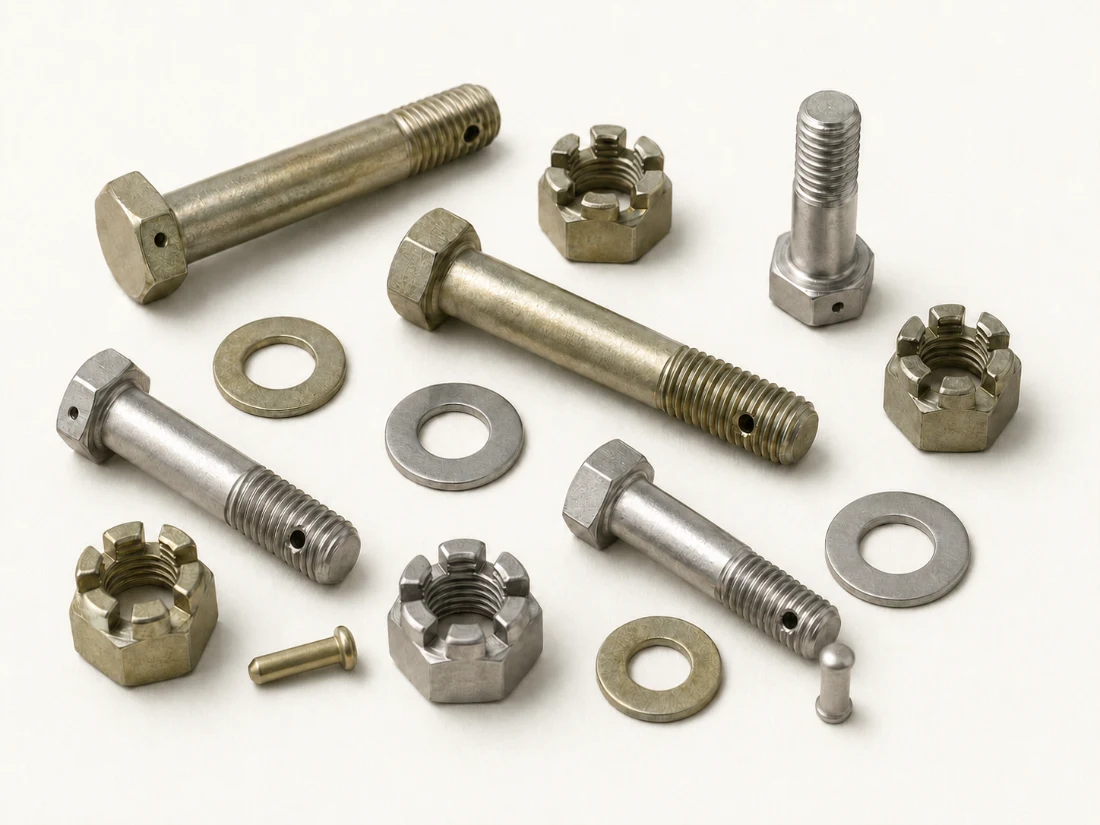
A correct part with the wrong paperwork is not a usable part.
On an aerospace program, hardware that matches the drawing in every dimension can still be rejected at receiving. What makes a component usable is the documented record that establishes its identity, its source and its conformance — and that record has to be built into the order from the start.
The requirements below determine whether hardware arrives ready to accept:
Complete and Accurate Part Numbers
The full part number, including dash numbers and suffixes, since each element carries meaning.
Specification and Drawing Revisions
The revision that governs the order, stated explicitly rather than assumed.
Material and Finish Requirements
Material, grade and finish requirements as called out by the specification.
Manufacturing-Source Information
Source identification where the drawing, specification or customer requires it.
Lot or Batch Identification
Lot identification maintained so material remains traceable to its production.
Certificates of Conformance
Certification identifying the product and its conformance to order requirements.
Special-Process Documentation
Records for plating, heat treatment, baking or coating where those processes are controlled.
Inspection or Testing Documentation
Objective evidence where the order or specification requires it.
Packaging and Labeling
Packaging, marking and preservation requirements that travel with the part.
Traceability Through the Chain
Preservation of the documented link between part and source across each step of distribution.
Documentation requirements should be communicated before quotation and stated clearly on the purchase order. Records that were not requested at the time of order cannot always be recreated afterward — once material has shipped, some information is no longer retrievable.
The documented connection between part and source.
Traceability is not a single document. It is the recorded chain that establishes what a part is and where it came from, assembled from whichever of the elements below the specification and order require.
Manufacturer Identity
Who produced the component.
Manufacturer Part Number
The number under which it was produced.
Customer Part Number
The number under which the customer controls it.
Purchase-Order References
Order references linking the shipment to its authorization.
Lot, Batch or Heat Identification
Identification tying the parts to a production lot or material heat.
Material Information
Material and grade information supporting the specified requirement.
Applicable Specification
The specification and revision the part was supplied against.
Finish or Processing Information
Records of the finishes and processes applied.
Certification Records
The certificates supplied with the shipment.
Quantity and Shipment Information
Quantities and shipment detail completing the record.
Required traceability varies according to the part, specification, customer and program. A commercial fastener does not automatically carry the same documentation as specification-controlled aerospace hardware, and the two should not be assumed equivalent on that basis.
Documents that may accompany an order.
Which of the following applies depends on the component, the specification, the manufacturing source and the accepted purchase-order requirements. Each should be identified during quotation rather than assumed.
Certificate of Conformance
A certificate of conformance may identify the supplied product and certify conformance to applicable order requirements. Whether a manufacturer certificate is available depends on the component and source, and should be confirmed when required.
Material Documentation
Material certifications or related records may be required to support the specified material or grade. Availability depends on the component, source and purchase-order requirements.
Manufacturer and Source Traceability
Documentation may identify the manufacturing source and provide a traceable chain through the distribution process when the specification or customer requires it.
Lot or Batch Identification
Lot identification supports separation and traceability for controlled hardware, keeping material identifiable to its production lot. Individual serialization of each fastener is not implied.
Special-Process Certifications
Plating, heat-treatment, baking, coating and similar records may be required when those operations are controlled by the drawing or specification. See plating and secondary operations.
Inspection and Test Documentation
Inspection reports, test reports or other objective evidence may be supplied when required, available and confirmed during quotation. Webson does not represent that all laboratory testing or dimensional inspection is performed internally.
AS9120B and ISO 9001.
Webson is certified to AS9120B and ISO 9001 for the distribution of fastening products and installation tooling. AS9120B is the aerospace quality-management standard written specifically for distributors, which is the relevant distinction: it addresses the risks that arise in handling and passing on hardware rather than in producing it.
Product Traceability
Maintaining the documented link between supplied product and its source.
Supplier Control
Qualification and monitoring of the sources material is obtained from.
Counterfeit-Part Prevention
Controls aimed at keeping suspect material out of the supply chain.
Documentation
Control of the records that accompany and support an order.
Product Preservation
Handling, packaging and storage that protect product and its identification.
Nonconformance Control
Documented handling of nonconforming material and customer notification.
Configuration and Revision Awareness
Attention to which drawing, specification and revision govern the order.
Customer and Regulatory Requirements
Flow-down of customer and applicable regulatory requirements into the order.
ISO 9001 provides the underlying framework for controlled, repeatable quality-management processes and continual improvement across the business.
Zero tolerance, applied as process.
Webson maintains a zero-tolerance approach to counterfeit parts. In practice that means a controlled sourcing and documentation process rather than a single inspection step — counterfeit material is generally identified by gaps in provenance, not by appearance.
Supplier Qualification
Sources are qualified and monitored under the quality system rather than used opportunistically.
Source and Traceability Review
Source and traceability information is reviewed as part of accepting material.
Part and Document Verification
Part identification is verified against the documentation supplied with it.
Lot Control
Lot identity and segregation are maintained through receipt and delivery.
Discrepancy Review
Discrepancies between product, documentation and order are investigated rather than reconciled informally.
Record Preservation
Records are retained according to applicable procedures and customer requirements.
Escalation of Suspect Product
Suspect or nonconforming product is escalated under documented procedures.
No Unsupported Substitutions
Substitutions are not introduced without the required customer or design-authority approval.
No quality system can guarantee that counterfeit material will never enter a supply chain. What controlled sourcing, documentation review and lot control provide is a process designed to detect it and a record that makes investigation possible.
One character changes the part.
AN, MS, NAS and NASM part numbers encode the configuration of the hardware. A different suffix or dash number is not a variant of the same part — it is a different part, and the difference can fall on any of the following:
Dimensions
Diameter, length, grip and head dimensions.
Thread Configuration
Thread form, size, pitch and class.
Material
Base material and alloy.
Strength
Property class and mechanical capability.
Finish
Plating, coating or surface treatment.
Locking Features
Self-locking elements and their type.
Drilling and Safety-Wire Provisions
Drilled heads or shanks for safety-wire installation.
Dash-Number Configuration
Size and length variations defined by the dash number.
Documentation Requirements
The records the specification requires for that configuration.
Application Suitability
Where the part is approved for use.
The complete part number, the current specification and the customer purchase order determine the acceptable component. A commercial part that resembles a Mil-Spec item is not interchangeable with it on that basis. See Mil-Spec Hardware.
Five steps from RFQ to release.
Documentation requirements are settled at step three, before the order is accepted. Special documentation requested after placement may not be obtainable for material already in process.
-
01
RFQ review
Webson reviews the complete part number, quantity, specification, revision and documentation requirements.
-
02
Source and availability review
Appropriate sourcing options are evaluated based on the technical and quality requirements.
-
03
Requirement confirmation
Questions involving traceability, certifications, approved sources, testing or special processing are clarified before the order is accepted.
-
04
Product and document review
Received hardware and applicable documentation are reviewed against the purchasing requirements.
-
05
Order release
Parts and required documentation are supplied according to the accepted order requirements.
Hardware supplied under documentation requirements.
AN Hardware
Air Force–Navy standard hardware supplied to the applicable specification.
MS Hardware
Military standard hardware supplied by complete part number.
NAS Hardware
National Aerospace Standard hardware with applicable documentation.
NASM Hardware
NASM-designated hardware sourced to the current specification.
Aerospace Bolts and Screws
Externally threaded hardware supplied with the records the order requires.
Self-Locking Nuts
Locking hardware where the locking feature is part of the specification.
Washers
Bearing and sealing components supplied to specification.
Pins and Rivets
Locating, retaining and permanent joining components.
Inserts and Retaining Components
Threaded inserts and retaining hardware for controlled assemblies.
Electronic Hardware
Panel, chassis and board hardware for avionics assemblies. See Electronic Hardware and assembly components.
Made-to-Print Components
Drawing-based aerospace parts sourced through qualified manufacturing. See custom fastener manufacturing.
Specially Processed Fasteners
Hardware supplied with specified finishes and secondary operations. See Custom Fasteners and Finishes.
The website represents only a portion of Webson’s sourcing capabilities. Submit the complete part number and documentation requirements for review, whether or not the item appears here. See Mil-Spec Hardware for the full product page.
Where controlled hardware is used.
Airframe Structures and Interiors
Structural and interior hardware supplied under specification and documentation control.
Avionics Racks and Panels
Mounting, panel and chassis hardware for avionics installations.
Defense Equipment
Specification-controlled hardware for defense systems and platforms.
Ground-Support Equipment
Hardware for support, handling and servicing equipment.
MRO and Spares
Replacement hardware for maintenance, repair and overhaul requirements.
Electronic and Mechanical Assemblies
Hardware for sub-assemblies feeding larger aerospace programs.
Specialized Production Equipment
Tooling and equipment hardware supporting controlled production.
See military and aerospace for more on Webson’s support of these programs.
Programs that keep documentation consistent.
On a recurring aerospace requirement, consistency of documentation matters as much as consistency of supply. Repeat requirements can be evaluated for the arrangements below.
Blanket Orders
A total quantity placed under one order and drawn down over the program period.
Scheduled Releases
Agreed release dates aligned to the production schedule.
Vendor-Managed Inventory
Recurring items folded into a managed replenishment program. See vendor-managed inventory.
Local Inventory Support
Agreed quantities held for release from Webson’s Deer Park, New York facility.
Custom Kitting and Packaging
Controlled hardware kitted per assembly or bill of material. See custom kitting and packaging.
Long-Term Supply Programs
Extended arrangements covering recurring requirements over a defined period.
Documentation, lot-control and approved-source requirements must remain clearly defined throughout a recurring program. Pricing, availability, lot continuity and delivery schedules are established per program and per part, and none are guaranteed in advance.
Information required for an aerospace RFQ.
Documentation requirements belong in the RFQ, not in a follow-up. The list below is what allows Webson to quote the part and its records together.
Complete Part Number
The full part number including dash numbers and suffixes.
Required Quantity
Quantity for this requirement.
Requested Delivery Date
When the material is needed.
Current Drawing or Specification
The controlling drawing or specification.
Applicable Revision
The revision that governs this order.
Material Requirements
Material and grade requirements that apply.
Finish Requirements
Plating, coating or finish requirements.
Approved Manufacturer or Source
Any approved-source restrictions imposed by the drawing, specification or customer.
Certificate-of-Conformance Requirements
Whether a certificate of conformance is required, and in what form.
Material Certification Requirements
Material certification or supporting records required.
Lot or Batch Traceability
Lot identification and traceability requirements.
Special-Process Certifications
Records required for plating, heat treatment, baking or coating.
Inspection or Test Reports
Inspection or test evidence required by the order.
Customer Quality Clauses
Quality clauses that must flow down to the order.
Packaging, Labeling or Preservation
Packaging, marking and preservation requirements.
Export-Control or Handling Instructions
Any applicable export-control or special handling requirements, which should be disclosed so they can be reviewed.
Purchase lists, drawings, specifications and quality clauses can be attached directly to the request on Webson’s RFQ page.
Submit Your Documentation Requirements →Traceability and documentation questions.
What does aerospace fastener traceability include?
Depending on the component and order requirements, traceability may cover the manufacturer identity, manufacturer and customer part numbers, purchase-order references, lot or batch identification, material information, the applicable specification, finish or processing information, certification records and shipment quantities. What is required varies according to the part, specification, customer and program.
Can Webson supply certificates with Mil-Spec fasteners?
Applicable certificates of conformance, material documentation and special-process certifications can be supplied according to the part, specification and accepted purchase-order requirements. Identify the documents needed during quotation so they are secured with the order.
Does every fastener order include the same documentation?
No. Documentation varies by component, specification, manufacturing source and purchase-order requirements. A commercial fastener does not automatically carry the same documentation as specification-controlled aerospace hardware, which is why requirements should be stated before the order is placed.
What information should be included with an aerospace RFQ?
Send the complete part number, quantity, requested delivery date, current drawing or specification with its revision, material and finish requirements, approved-source requirements, certificate-of-conformance and material certification requirements, lot traceability requirements, special-process and inspection or test-report requirements, customer quality clauses, packaging or preservation requirements and any export-control or handling instructions that apply.
Can Webson supply AN, MS, NAS and NASM hardware?
Yes. Webson supplies and sources AN, MS, NAS and NASM hardware including bolts, screws, self-locking nuts, washers, pins, rivets, inserts and retaining components. The website represents only a portion of Webson’s sourcing capabilities — submit the complete part number for review.
Can special-process certifications be supplied?
Plating, heat-treatment, baking, coating and other special-process documentation can be supplied when those operations are controlled by the drawing or specification and the requirement is confirmed during quotation. Availability depends on the component and the processing source.
How does Webson address counterfeit-part risk?
Webson maintains a zero-tolerance approach to counterfeit parts, supported by supplier qualification and monitoring, review of source and traceability information, verification of part identification and documentation, lot control, discrepancy review, record retention and escalation of suspect or nonconforming product. No quality system can guarantee that counterfeit material will never enter a supply chain, which is why controlled sourcing and documentation review are applied throughout.
Can recurring aerospace parts be included in an inventory program?
Recurring Mil-Spec and aerospace requirements can be evaluated for blanket orders, scheduled releases, vendor-managed inventory, local inventory support, custom kitting and long-term supply programs. Documentation, lot-control and approved-source requirements must remain clearly defined across the program.
Where can I download Webson’s AS9120B and ISO 9001 certificate?
Webson’s Quality Management Certificate is available on the certifications page and can be downloaded directly at assets/Webson-Quality-Management-Certificate.pdf.
More from Webson Fasteners.
Mil-Spec Hardware
AN, MS, NAS and NASM hardware supplied to specification with aerospace-grade traceability.
Military and Aerospace
Hardware for airframe, avionics, defense and ground-support programs.
Quality and Certifications
AS9120B and ISO 9001 certification for the distribution of fastening products and installation tooling.
Sourcing and Cross-Reference Support
Research on legacy, obsolete and difficult-to-source part numbers.
Custom Fastener Manufacturing
Made-to-print fasteners and precision components sourced through qualified manufacturing.
Plating and Secondary Operations
Plating, heat treatment, post-plating baking and thread patching coordinated with the order.
Vendor-Managed Inventory
Managed replenishment, bin stocking, scheduled releases and blanket-order programs.
Products
The complete range of commercial, electronic, assembly, Mil-Spec and custom hardware.
Have an aerospace hardware requirement with controlled documentation?
Send Webson the complete part numbers, quantities, specifications, quality clauses and required documentation. Our team will review the requirement and prepare an appropriate sourcing quotation.