Difficult-to-source fasteners researched against the right requirements.
Webson Fasteners helps manufacturers research non-stock, legacy, obsolete and difficult-to-source fasteners and components. Our team can review part numbers, drawings, specifications and purchase lists to identify sourcing options or potential cross-references for customer evaluation.
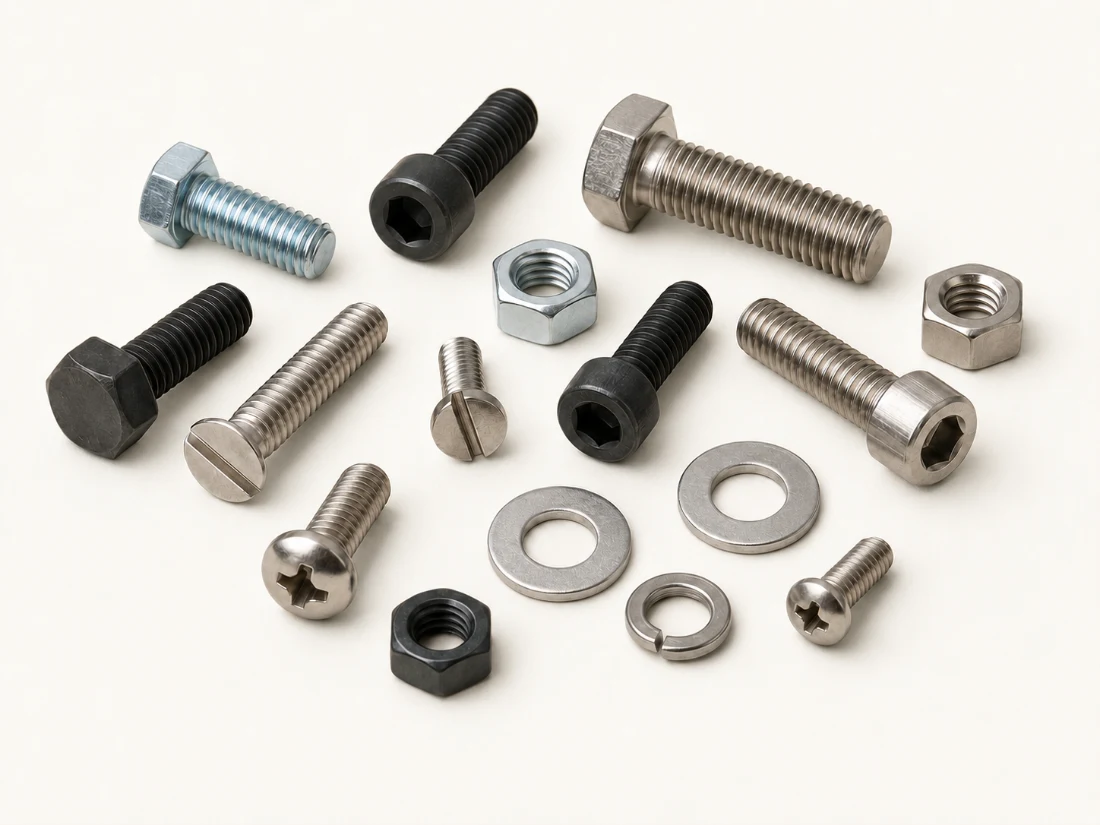
Why one line item becomes a project.
Most fasteners are ordered without a second thought. A small number consume hours: the part number returns nothing, the manufacturer is gone, the drawing cites a specification that no longer exists. Searching a catalog description does not resolve those cases, because the description is rarely what controls the part.
Webson works from the technical and commercial requirements behind the number. These are the situations that usually bring a part here:
The original manufacturer no longer produces the part
Production has ended and the number no longer maps to an available product.
A legacy part number carries incomplete information
The number exists in the system but the technical detail behind it was never fully recorded.
The original supplier has an extended lead time
The part is still available in principle, but not on a timeline production can absorb.
The drawing references a superseded specification
An older or cancelled specification is cited, requiring research into what replaced it.
Nonstandard material, finish or dimension
A detail outside standard ranges rules out ordinary catalog sourcing.
Required documentation is difficult to obtain
The part is available but the certification or traceability the order requires is not.
A sample exists but little technical data
Physical hardware in hand, with no drawing or specification to define it.
A bill of material spans several categories
Commercial, electronic, assembly, Mil-Spec and custom items mixed in one list.
A standard-looking part has special requirements
Ordinary appearance, but application requirements that a stock item will not satisfy.
The current source cannot support the quantity
An existing supplier no longer serves the volume or minimum the requirement needs.
Not every item can be located or replaced. Some parts no longer exist in any form, and some cannot be identified from the information available. Where that is the case, Webson will say so rather than propose a part that has not been established as suitable.
Five steps from part number to approved source.
The final step is the one that matters most. Webson presents findings; the customer’s drawing, specification and approval requirements control the selection.
-
01
Collect available information
Webson reviews the part number, manufacturer, drawing, specification, description, quantity and documentation requirements.
-
02
Identify controlling characteristics
Relevant dimensions, threads, materials, finishes, strength requirements, head or drive styles and other critical features are identified.
-
03
Research sourcing options
Webson reviews available inventory, manufacturing sources, potential alternate manufacturers and made-to-print options.
-
04
Present findings for evaluation
Available parts or potential cross-references are presented with the relevant technical and commercial information.
-
05
Obtain customer approval
The customer, engineer or design authority determines whether a proposed alternative is acceptable before an order is placed.
Two fasteners can look identical and not be.
Visual similarity establishes very little. The same head, drive and overall length can sit on parts of different material, different property class, different thread fit, different finish and different specification — and only one of them may be acceptable in the assembly. A meaningful cross-reference requires comparison across the characteristics below.
Overall Dimensions
Envelope dimensions and any features that affect fit in the assembly.
Diameter and Length
Nominal diameter, length, grip length and any length under head requirements.
Thread Size, Pitch and Class
Thread form, pitch and class of fit, which govern assembly with the mating part.
Head Style
Head configuration, height and bearing surface.
Drive Type
Drive style and size, and the tooling required to install it.
Point Configuration
Point or end style, where it affects installation or function.
Material and Grade
Base material and grade, which affect strength, corrosion behavior and compatibility.
Strength or Property Class
Property class or grade markings that establish mechanical capability.
Heat-Treatment Requirements
Condition or hardness requirements imposed by the drawing or specification.
Plating, Coating or Finish
Finish type, class and thickness, which affect fit, appearance and corrosion behavior.
Applicable Specification
The industry, military or customer specification that governs the part.
Manufacturer Part Number
The number itself, and what it does and does not define.
Performance Requirements
Torque, vibration, temperature or other application requirements stated for the part.
Certification and Traceability
Documentation the order requires, which can differ between otherwise similar parts.
Packaging and Labeling
Packaging and identification requirements attached to the part number.
Form, Fit and Function
Whether the candidate performs the same role in the same space in the same way.
Webson does not grant engineering approval and does not recommend substitution without technical review. Findings are presented as candidates so the customer or design authority can evaluate them against the requirement.
Numbers that outlive the parts they described.
Long-running products accumulate part numbers whose origins are no longer documented. The number stays in the bill of material long after the manufacturer, the specification or the description behind it has moved on.
Discontinued Manufacturer Numbers
Numbers that no longer correspond to a product in current production.
Legacy Internal Numbers
Customer numbers with no external cross-reference recorded.
Old Bills of Material
Lists carried forward across systems, with detail lost in each migration.
Superseded Specifications
Military or industry specifications since replaced, cancelled or renumbered.
Acquired or Renamed Manufacturers
Parts whose original maker has been acquired, renamed or absorbed.
Incomplete Descriptions
Records too abbreviated to establish what the part actually is.
Hardware Identified Only by Sample
A physical part with no supporting documentation of any kind.
Drawings at Older Revisions
Drawings whose current revision status cannot be confirmed.
Supporting material is often more useful than the part number itself. Old purchase orders, packaging labels, photographs, samples, drawings, specification references and previous certifications all help narrow the search — a label from the last shipment can settle in seconds what a description cannot.
Incomplete information limits what can be identified. A sample can establish configuration and dimensions but not material, strength, finish or specification compliance, and Webson does not represent that every sample can be reverse engineered into a defined part.
Five results, not one, and they are not equivalent.
When Webson researches a manufacturer part number, the outcome falls into one of the categories below. They differ in how far they depart from the original, and therefore in how much review they require. None of them is automatically equivalent to the original part.
Identical Part, Another Source
The same part obtained through a different source, where the source itself may require approval.
Dimensional Cross-Reference
A part matching the dimensional requirements, which may still differ in material, finish or specification.
Functional Alternative
A different part that performs the same function, requiring the closest technical review of the five.
Modified Standard Fastener
A standard component altered to meet the requirement through an approved change or secondary operation.
Made-to-Print Replacement
A part manufactured to the customer’s current drawing and revision when no existing product fits.
Manufacturer approval, customer approval or design-authority approval may be required before a different source or part number is accepted. Approved-source requirements on the drawing or purchase order take precedence over availability — a part that is easier to obtain is not thereby acceptable.
Specification hardware carries more than a number.
AN, MS, NAS and NASM part numbers encode material, finish and configuration in ways that a commercial description does not, and the specifications behind them are revised, superseded and cancelled over time. Research on this hardware has to account for all of it.
Specification Revisions
Which revision applies, and what changed between issues.
Superseded Part Numbers
Numbers replaced or cancelled, and what now covers the requirement.
Dash-Number Configurations
Dash numbers defining size, length and configuration within a specification.
Material and Finish Codes
Codes embedded in the part number that establish material and finish.
Approved-Source Requirements
Restrictions on which manufacturers or sources may supply the part.
Certification and Traceability
Documentation required by the specification or the purchase order.
Lot Control
Lot identification and segregation requirements carried through receipt and delivery.
Customer-Specific Documentation
Additional documentation imposed by the customer’s own quality requirements.
A commercial part that resembles a Mil-Spec item should not be treated as a substitute for it without appropriate technical approval. Webson does not approve deviations from an aerospace drawing or specification. See Mil-Spec Hardware and aerospace traceability and documentation.
Send the list, not one line at a time.
Sourcing problems rarely arrive alone. Webson can review a whole list in one pass rather than requiring a separate request per item:
A Recurring Purchase List
The items bought repeatedly, reviewed together for availability and consolidation.
A Bill of Material
A complete assembly list, including items outside Webson’s stocked range.
A List of Problem Parts
The specific items causing shortages, delays or sourcing difficulty.
A Supplier-Consolidation Project
Related components currently split across multiple vendors.
Long-Lead or Obsolete Items
Parts whose lead time or availability has become a production risk.
A Mix of Standard and Custom
Lists combining catalog hardware with drawing-based components.
Because Webson covers commercial hardware, electronic hardware, electronic assembly components, Mil-Spec hardware and custom fasteners and finishes, a single review can span categories that would otherwise require separate sourcing requests and separate supplier relationships.
Not every line item on a list will be quotable. Some parts fall outside what Webson can source, and the review identifies which those are rather than leaving them unanswered.
Standard, modified or made to print.
Research generally resolves to one of three paths. Which is most appropriate depends on the technical requirements, quantity, tooling, lead time, documentation requirements and customer approval — not on which is quickest to propose.
Standard Product
An existing catalog or industry-standard fastener that meets the stated requirements. Where one exists, it is normally the fastest and simplest route.
Modified Standard Product
A standard component receiving an approved dimensional change, finish, patch or other secondary operation. Often faster than new manufacture. See plating and secondary operations.
Made-to-Print Component
A custom part produced to the customer’s current drawing and revision when no existing product fits. See custom fastener manufacturing.
Controls applied to a sourced part.
A part found through research is still an order, and it moves through the same controls. Sourcing work is managed under Webson’s AS9120B and ISO 9001 certified quality-management system.
Purchase-Order and Contract Review
Order requirements are reviewed against the identified part and specification before release.
Part-Number Verification
The part number supplied is verified against what is being quoted and shipped.
Drawing and Revision Control
The identified drawing and revision govern the order, and revisions are handled as changes.
Supplier Qualification
Sources are selected and maintained under the quality system, including approved-source requirements.
Certification Review
Required certificates are reviewed against the order before parts are released.
Material and Lot Traceability
Applied when required by the purchase order or applicable specification, rather than automatically.
Inspection Requirements
Receiving inspection performed under established procedures, with additional inspection where specified.
Documentation Retention
Records are retained according to applicable quality-system and customer requirements.
Nonconformance Control
Nonconforming material is handled under documented procedures, with customer notification where required.
Certifications and complete material traceability are not automatic on every commercial fastener. Identify each documentation requirement during quotation and include it on the purchase order so it is secured with the part rather than sought afterward.
Keeping a hard-won part from becoming hard again.
A part that took real work to source is worth handling differently on the next requirement. Once the source, specification and documentation are established, recurring items can be evaluated for the arrangements below.
Vendor-Managed Inventory
Recurring items folded into a managed replenishment program. See vendor-managed inventory.
Scheduled Releases
Agreed release dates aligned to the production schedule.
Blanket Orders
A total quantity placed under one order and drawn down over the program period.
Local Inventory Support
Agreed quantities held for release from Webson’s Deer Park, New York facility.
Bin Stocking
Replenishment at designated stocking or point-of-use locations.
Custom Kitting and Packaging
Sourced parts packaged with related hardware per assembly or bill of material. See custom kitting and packaging.
These arrangements are evaluated case by case. Stocking, availability, pricing and delivery schedules are established per program and per part, and none are guaranteed in advance.
Everything you have, even if it is not much.
Difficult parts are usually difficult because information is missing. Send whatever exists — a label, an old purchase order or a photograph often moves a search further than a description does.
Current Part Number
The number in use today, however incomplete.
Original Manufacturer
The original maker, if known or recorded anywhere.
Internal Part Number
The customer’s own number for the item.
Drawing and Revision
Any drawing available, with its revision.
Applicable Specification
Industry, military or customer specification cited for the part.
Product Description
The description as it appears in the system or on the list.
Required Dimensions
Measured or specified dimensions, including tolerances where known.
Thread Requirements
Thread size, pitch, class and length of thread.
Material and Grade
Base material and grade, or what is believed to apply.
Finish or Coating
Plating, coating or finish requirements.
Quantity and Annual Usage
Quantity needed now and expected annual volume.
Required Delivery Date
When the parts are needed.
Certification and Traceability
Documentation required by the order or specification.
Approved Manufacturers or Sources
Any approved-source restrictions that apply.
Previous Purchase Order
An earlier order for the item, which often carries the missing detail.
Previous Certification or Label
A certificate or packaging label from a prior shipment.
Photographs or Sample
Images or a physical sample of the existing part.
Reason for Reviewing an Alternative
Why a different source is being considered — lead time, cost, availability or obsolescence.
Drawings, purchase lists, bills of material, photographs and supporting documents can be attached directly to the request on Webson’s RFQ page.
Submit Your Part Information →Sourcing and cross-reference questions.
Can Webson help locate an obsolete or discontinued fastener?
Webson can research discontinued and legacy part numbers using the part number, manufacturer, drawing, specification, previous purchasing information or a sample. Not every item can be located or replaced — what can be found depends heavily on how much technical information is available.
Can Webson cross-reference a manufacturer part number?
Yes. Webson can review a manufacturer part number and research potential sourcing options, including an identical part from another source, a dimensional cross-reference, a functional alternative, a modified standard fastener or a made-to-print replacement. Findings are presented as candidates for customer evaluation.
Is a cross-referenced fastener automatically interchangeable?
No. A potential alternative must be evaluated and approved by the customer or the applicable design authority before it is used. Parts that match dimensionally can still differ in material, strength, thread fit, finish, specification or documentation, and Webson does not approve substitutions on the customer’s behalf.
Can Webson review a complete bill of material or purchase list?
Yes. Recurring purchase lists, bills of material, problem-part lists, long-lead or obsolete item lists and supplier-consolidation projects can all be submitted for review across commercial, electronic, assembly, Mil-Spec and custom categories. Not every line item will necessarily be quotable.
Can Webson research superseded Mil-Spec part numbers?
Webson can research AN, MS, NAS and NASM part numbers, including specification revisions, superseded numbers and dash-number configurations. Approved-source, certification, traceability and lot-control requirements should be identified with the request.
What if we only have a sample or photograph?
A sample or photograph can help begin the research process by establishing basic configuration and dimensions. It may not be enough to establish material, strength, finish, tolerances or specification compliance, so an exact identification cannot be assumed from a sample alone.
Can a standard fastener be modified instead of custom manufactured?
Often, yes. Modifying a standard component — a dimensional change, a different finish, an added patch or secondary operation — can be faster and simpler than new manufacture. Which path suits the requirement depends on the technical requirements, quantity, tooling, lead time, documentation and customer approval.
Can sourced parts include certifications and traceability?
Certifications, traceability and inspection documentation can be supplied when required by the component, specification and purchase order. They are not automatic on every commercial fastener — identify each documentation requirement during quotation and state it on the purchase order.
What information should be submitted for a sourcing review?
Send the current part number, original manufacturer if known, internal part number, drawing and revision, applicable specification, description, dimensions, thread, material and finish requirements, quantity and annual usage, required delivery date, certification requirements, approved sources, previous purchase orders or certifications, and photographs or sample information.
More from Webson Fasteners.
Products
The complete range of commercial, electronic, assembly, Mil-Spec and custom hardware.
Commercial Hardware
Bolts, screws, studs, nuts, washers and related standard fasteners.
Electronic Hardware
Standoffs, spacers, handles, knobs and mounting hardware for PCBs, panels and chassis.
Mil-Spec Hardware
AN, MS, NAS and NASM hardware supplied to specification with aerospace-grade traceability.
Custom Fastener Manufacturing
Made-to-print fasteners and precision components sourced through qualified manufacturing.
Plating and Secondary Operations
Plating, heat treatment, post-plating baking and thread patching coordinated with the order.
Vendor-Managed Inventory
Managed replenishment, bin stocking, scheduled releases and blanket-order programs.
Industries
The sectors Webson supplies, from aerospace and electronics to medical and life-safety equipment.
Certifications
AS9120B and ISO 9001 certification for the distribution of fastening products and installation tooling.
Have a difficult part number or purchasing list to review?
Send Webson the available part numbers, drawings, specifications, quantities and previous purchasing information. We will research the requirement and identify available sourcing paths or potential alternatives for your evaluation.