Recurring fastener supply aligned with your purchasing schedule.
Webson Fasteners can structure recurring fastener and component requirements through blanket orders, scheduled releases and longer-term supply agreements. These programs help customers plan repeat purchases, coordinate delivery timing and reduce the administrative work associated with issuing individual orders.
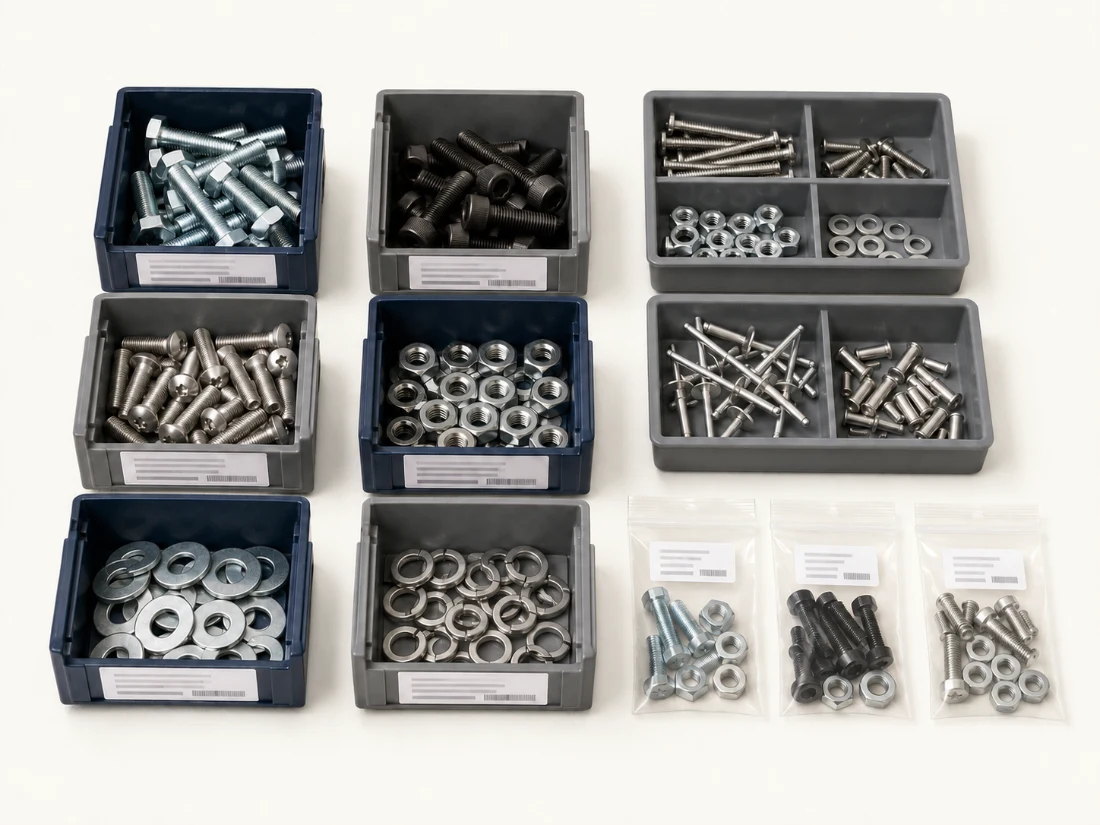
The same order, placed thirty times a year.
Recurring fastener requirements generate work out of proportion to their value. The parts are known, the usage is broadly predictable, and yet each requirement passes through requisition, quotation, order placement, receipt and invoice as though it were new. A structured program answers the requirement once and then executes against it.
These are the pressures such a program is intended to organize:
Reissuing orders for the same parts
The same part numbers pass through the full purchasing cycle repeatedly across a year.
Repeated quoting and administration
Quotation and order administration are duplicated on requirements already well understood.
Uncertain production schedules
Build timing is not fixed far enough ahead to place firm orders comfortably.
Long or variable lead times
Replenishment intervals that shift make each individual order harder to time.
Fluctuating order quantities
Requirements that move between runs complicate both pricing and planning.
Coordinating deliveries with storage
Volume purchasing conflicts with the space actually available to receive it.
Balancing volume pricing against usage
Larger quantities may price better but tie up cash and space against uncertain consumption.
Multiple categories and suppliers
Related components split across vendors, each with separate terms and cycles.
Planning custom or processed components
Parts requiring tooling, manufacturing or special processing need longer planning horizons than stock items.
An agreed program is intended to make recurring purchasing more organized and more predictable. It does not guarantee cost savings, uninterrupted supply or inventory availability — what it provides is agreed terms, and outcomes follow from those terms and from the accuracy of the forecast behind them.
Six structures, used alone or combined.
Blanket Orders
A blanket order establishes an agreed quantity or value over a defined period, with deliveries or releases occurring according to the accepted order terms. The commitment is placed once and drawn down across the period.
Scheduled Releases
A larger requirement is divided into planned shipments based on agreed dates or customer release instructions, so material arrives across the program rather than all at once.
Longer-Term Pricing Arrangements
Pricing may be established for a defined period where product, volume, delivery and market conditions support it. Duration, adjustment provisions and validity are governed by the accepted quotation or agreement rather than assumed.
Volume Commitments
Expected annual or program volume helps Webson evaluate sourcing, manufacturing and pricing options. Volume informs that evaluation; it does not automatically produce a particular discount.
Just-in-Time Deliveries
Deliveries can potentially be scheduled closer to production requirements where the product, forecast and program structure permit. See vendor-managed inventory.
Local Inventory Support
Recurring requirements may be evaluated for local inventory support according to usage, lead time and agreement terms. Local inventory is a program decision per item, not an automatic feature of a blanket order.
Six steps from purchase history to running program.
-
01
Review purchasing history
Webson reviews part numbers, quantities, order frequency, lead times and previous usage.
-
02
Understand future demand
The customer provides estimated annual usage, production forecasts and known changes in demand.
-
03
Define the commercial structure
Products, quantities, pricing terms, program period and purchase commitments are reviewed.
-
04
Establish release requirements
Release quantities, delivery schedules, lead-time requirements and communication procedures are agreed.
-
05
Source and supply
Webson coordinates purchasing, manufacturing or inventory according to the accepted program.
-
06
Review program performance
Usage, remaining commitments, forecasts and future requirements can be reviewed during the program.
Final terms depend on the accepted quotation, purchase order or supply agreement. Nothing described on this page constitutes an offer or a commitment on its own.
Blanket order or vendor-managed inventory.
These are often discussed together and are frequently confused. A blanket order is primarily a commercial purchasing commitment covering an agreed quantity, value or period. Vendor-managed inventory is an inventory-management program in which replenishment and stocking requirements are managed according to an agreed process. One concerns how material is bought; the other concerns how it is kept available.
They combine in several ways, and no single structure suits every customer:
Blanket Order Alone
A commercial commitment with customer-directed releases and no stocking program attached.
VMI Supported by a Blanket Order
Replenishment managed by Webson, with the commercial commitment underpinning it.
Scheduled Releases Without Bin Stocking
Planned shipments to the customer’s own stores, with no on-site stocking arrangement.
Local Inventory, Customer-Directed Releases
Agreed quantities held locally and released when the customer calls for them.
A Combination
A structure designed around the specific production requirement rather than a standard package.
Read more about vendor-managed inventory and bin stocking.
Categories that fit a recurring program.
Commercial Hardware
Bolts, screws, studs, nuts and washers, plus pins, retaining rings, threaded rod and inserts.
Electronic Hardware
Spacers, standoffs, handles, knobs and captive panel hardware for PCB, chassis and panel assembly.
Electronic Assembly Components
Rivets, grommets, clamps, cable ties and related joining, routing and sealing components.
Mil-Spec Hardware
AN, MS, NAS and NASM hardware supplied to specification with the documentation the order requires.
Custom Fasteners and Finishes
Made-to-print fasteners and specially finished or patched components.
Custom Kits and Packaged Sets
Kitted and packaged hardware sets released against the production schedule.
Program suitability depends on demand consistency, quantity, lead time, sourcing conditions and documentation requirements. An item with irregular usage or a volatile supply base may be better handled as ordinary orders, and the review will say so.
What longer-term pricing actually depends on.
Pricing held for a defined period is sometimes described as locked pricing. The duration and the conditions under which it holds are set by the approved agreement — the term is not open-ended, and any adjustment provisions form part of what is agreed. The factors below all bear on what can be offered and for how long.
Product Type
The category and configuration of the item.
Material
Base material, which affects both cost and supply behavior.
Finish
Plating, coating or finishing requirements.
Quantity
Quantity per release and in total.
Estimated Annual Usage
Expected annual volume across the program.
Program Duration
The period over which terms would apply.
Release Quantities
How the total is drawn down across releases.
Supplier Minimums
Manufacturing or supplier minimum quantities that apply.
Tooling and Setup
Tooling or setup requirements for manufactured items.
Raw-Material Conditions
Material market conditions over the proposed term.
Freight and Logistics
Shipment frequency, size and delivery arrangements.
Special Processing
Secondary operations required to complete the part.
Documentation Requirements
Certification and traceability requirements attached to each release.
Any pricing adjustment provisions should be stated in the accepted quotation or agreement. Webson does not provide financial, commodity-market or contractual advice — pricing terms are established during quotation and reviewed on their commercial merits.
A forecast is a planning input, not a commitment.
A forecast does not need to be exact to be useful. It needs to be honest about the shape of demand, because it drives decisions that are difficult to reverse once material has been purchased or manufacturing scheduled.
Purchasing Quantities
How much material is committed and when.
Manufacturing Runs
Run sizes and scheduling for manufactured items.
Stocking Requirements
What is held, and where, across the program.
Release Schedules
How releases are spaced against expected consumption.
Supplier Lead Times
What lead times must be planned around.
Program Duration
How long a program can sensibly be structured for.
Forecasts are planning inputs and may be subject to the commercial terms of the individual agreement. Substantial changes in usage, design revisions or production schedules may require the program to be reviewed — and the earlier a change is communicated, the more of it can be absorbed.
Forecast changes cannot always be accommodated without effects on pricing, inventory or lead time. Material already purchased, manufacturing already scheduled and tooling already committed constrain how far a program can be adjusted mid-term.
Where a program earns its keep.
Blanket programs are often most valuable on the parts that are least convenient to buy one order at a time. Where tooling, setup or multi-stage processing is involved, planning across a period is materially different from repeating the exercise each quarter.
Custom Manufacturing
Made-to-print parts produced across planned runs. See custom fastener manufacturing.
Tooling or Setup
Items where tooling and setup are better amortized across a program.
Heat Treatment
Parts requiring heat treatment as part of the routing.
Plating
Finishing coordinated to specification on each run. See plating and secondary operations.
Post-Plating Baking
Bake requirements that must be scheduled into the processing sequence.
Thread Patching
Patching or locking treatments applied per specification.
Controlled Documentation
Parts whose documentation requirements must repeat identically on every release.
Custom Packaging or Kitting
Kits and packaged sets prepared to a standing structure. See custom kitting and packaging.
Minimum quantities and commitments may apply where parts require custom manufacturing or special processing. Those minimums come from the manufacturing and processing sources involved and are established during quotation.
Consistency across every release.
A program runs for months, which makes consistency the central quality question: release twelve should carry the same controls and the same documentation as release one. Program orders are managed under Webson’s AS9120B and ISO 9001 certified quality-management system.
Purchase-Order and Contract Review
Program terms and each release are reviewed against the agreement and specification.
Part-Number Control
Program items are managed by controlled part number so substitutions are not introduced without agreement.
Drawing and Revision Control
The governing drawing and revision are controlled across the program, and revisions handled as changes.
Supplier Qualification
Sources are qualified and monitored under the quality system for the program duration.
Material and Lot Traceability
Applied when required by the purchase order or applicable specification, rather than automatically.
Certification Review
Required certificates are reviewed against each release before material is supplied.
Inspection Requirements
Receiving and any specified inspection performed under established procedures.
Documentation Retention
Records retained according to applicable quality-system and customer requirements.
Nonconformance Control
Nonconforming material handled under documented procedures, with customer notification where required.
Documentation requirements should be consistent across each release and clearly defined in the original agreement and purchase order. Not every commercial part carries full material traceability — where it is required, it must be specified at the outset so it applies to every release rather than only to the first. See aerospace traceability and documentation.
Where recurring programs tend to apply.
Aerospace and Defense
Recurring specification-controlled hardware with consistent documentation across releases.
Electronics and Assembly
Board, panel and chassis hardware consumed steadily across product configurations.
Medical Equipment
Repeating device and enclosure hardware on planned production schedules.
Enclosures and Fabrication
Access, fastening and sealing hardware for ongoing cabinet and rack production.
Lighting Equipment
Fixture and bracket hardware running across multiple SKUs and seasons.
Security Equipment
Panel and enclosure hardware for continuing equipment production.
Industrial Manufacturing
Production hardware for standard product lines and recurring builds.
Maintenance and Repair
MRO hardware consumed at a steady rate across plant operations.
See the full range of sectors Webson supports on the industries page.
Information required to structure a program.
Purchasing history is the most useful single input. It shows what was actually consumed rather than what was planned, which is what a program has to be built on.
Part Numbers and Descriptions
The items proposed for the program.
Drawings and Specifications
Applicable drawings and specifications for controlled items.
Estimated Annual Usage
Expected annual volume per part number.
Historical Purchase Quantities
What was actually bought over recent periods.
Typical Order Frequency
How often these items are currently ordered.
Proposed Program Duration
The period the program would be expected to cover.
Preferred Release Quantities
How the total should be drawn down per release.
Requested Delivery Schedule
Timing and cadence of deliveries.
Current Supplier Lead Times
Lead times currently experienced on these items.
Material and Finish Requirements
Material, grade and finish requirements per item.
Certification and Traceability
Documentation required on each release.
Packaging and Labeling
Packaging format and identification requirements.
Known Production Changes
Planned volume changes, revisions or new programs affecting usage.
Target Start Date
When the program would need to begin.
Purchase-Order or Agreement Requirements
Contractual or purchase-order requirements that must be accommodated.
Purchasing histories, bills of material, spreadsheets, drawings and supporting specifications can be attached directly to the request on Webson’s RFQ page.
Submit Your Recurring Requirements →Supply program questions.
What is a blanket order for fasteners?
A blanket order establishes an agreed quantity or value over a defined period, with deliveries or releases occurring according to the accepted order terms. Rather than issuing a new purchase order for every requirement, the commitment is placed once and drawn down across the program period.
How do scheduled releases work?
A larger requirement is divided into planned shipments based on agreed dates or customer release instructions. Release quantities, timing and the communication procedure are established with the customer when the program is set up.
Can Webson offer longer-term pricing?
Pricing may be established for a defined period when the product, volume, delivery structure and market conditions support such an arrangement. The duration, any adjustment provisions and the validity of the pricing are governed by the accepted quotation or agreement, and are established per program rather than offered as a standing term.
Does a blanket order guarantee that inventory will always be available?
No. A blanket order is a commercial purchasing commitment; it does not by itself constitute a stocking commitment. Stocking and availability commitments are governed by the specific program terms and should not be assumed outside the accepted agreement.
What is the difference between a blanket order and vendor-managed inventory?
A blanket order is primarily a commercial purchasing commitment covering an agreed quantity, value or period. Vendor-managed inventory is an inventory-management program in which replenishment and stocking requirements are managed according to an agreed process. They are often used together, but either can be used without the other.
Can custom fasteners be included in a blanket program?
Yes, and recurring custom parts are often well suited to one, since tooling, setup and special processing are more practical to plan across a program than order by order. Minimum quantities and commitments may apply where parts require custom manufacturing or special processing.
Can Mil-Spec and traceable hardware be supplied through scheduled releases?
Yes. Mil-Spec and specification-controlled hardware can be supplied on a release schedule. Documentation, lot-control and approved-source requirements should be defined in the original agreement and applied consistently to each release.
What happens if our forecast or production schedule changes?
Webson can review changes to usage, design revisions or production schedules. Pricing, inventory and delivery implications depend on the timing of the change and the commitments already in place under the program, so changes should be communicated as early as possible.
What information is needed to request a recurring supply program?
Send the part numbers and descriptions, drawings and specifications, estimated annual usage, historical purchase quantities, typical order frequency, proposed program duration, preferred release quantities and delivery schedule, current supplier lead times, material and finish requirements, certification and traceability requirements, packaging requirements, known production changes, target start date and any purchase-order or agreement requirements that apply.
More from Webson Fasteners.
Vendor-Managed Inventory
Managed replenishment, bin stocking, scheduled releases and blanket-order programs.
Custom Kitting and Packaging
Kits packaged by assembly, job, work order or production requirement.
Custom Fastener Manufacturing
Made-to-print fasteners and precision components sourced through qualified manufacturing.
Aerospace Traceability and Documentation
Certifications, lot traceability and order documentation for Mil-Spec and aerospace hardware.
Products
The complete range of commercial, electronic, assembly, Mil-Spec and custom hardware.
Commercial Hardware
Bolts, screws, studs, nuts, washers and related standard fasteners.
Mil-Spec Hardware
AN, MS, NAS and NASM hardware supplied to specification with aerospace-grade traceability.
Industries
The sectors Webson supplies, from aerospace and electronics to medical and life-safety equipment.
Certifications
AS9120B and ISO 9001 certification for the distribution of fastening products and installation tooling.
Have recurring fastener requirements to plan?
Send Webson your part numbers, purchasing history, expected annual usage and preferred release schedule. We will review the requirements and determine whether a blanket order, scheduled-release or longer-term pricing program is appropriate.